Noodoe EV
Making EV charging as simple as scanning a QR code
Redesigning the driver experience for a global EV charging platform operating in 18 countries — where 73% of EV drivers report charging issues and only 59% of sessions succeed industry-wide.
RoleUX Designer
Design team memberScale18 Countries
40 US StateTimeline9 Months
2021-2022PARTERNSAudi · Volvo · VW
Skoda · ABM IndustriesPlatformIOS . Android
10 languages supportedImpact98% uptime
vs. industry avg 78%02
The Problem
EV charging is broken — and it's killing EV adoption
The electric vehicle revolution has a dirty secret: charging is a terrible user experience. While the cars themselves have become genuinely desirable, the infrastructure that keeps them running remains frustratingly unreliable, confusing, and fragmented.
Imagine pulling into a gas station, but first you need to download an app, create an account, add a credit card, figure out which pump is compatible with your car, and then hope the pump actually works. That's EV charging in 2025.
73%
Encountered charging issues
USCALE 2025, 5,004 drivers59%
Successful Completion Rate
ChargeHub, 50K+ comments46%
Complaints about App Performance
USCALE 2025 Survey41%
Hesitant to Buy an EV Due to Charging Issues
J.D. Power 2025"When you go to a petrol station, do you have to register your personal details at each one using an online form on the fiddly keyboard on your phone while you stand in the rain?"
— 1-star review, UK EV Charging UX Report 2025
The five core UX failures plaguing EV charging
App Chaos
Each charging network requires a different app. On average, EV owners need 3-5 charging apps. Every time they encounter a new brand, they have to register again, add payment information, and learn a new interface.
25% of all reviews mention payment issuesInaccurate Status
The app shows the charging station as "available," but it is actually broken or occupied. The owner arrives to find it unable to charge—even though the battery may be low.
27% of charging attempts fail on averagePayment Disputes
Confusing pre-authorization deductions, failed transactions, forced wallet top-ups, and contactless card reader malfunctions. Payment satisfaction plummeted by 19 percentage points.
Payment satisfaction: 54% → 35% (2023-2025)First-time users are giving up.
Which connector? Is it compatible? How do I start it? Why isn't it working? The whole process is confusing for someone using a non-Tesla public charging station for the first time.
Tesla plug-and-pay = gold standard others can't match.Uncertainty during charging
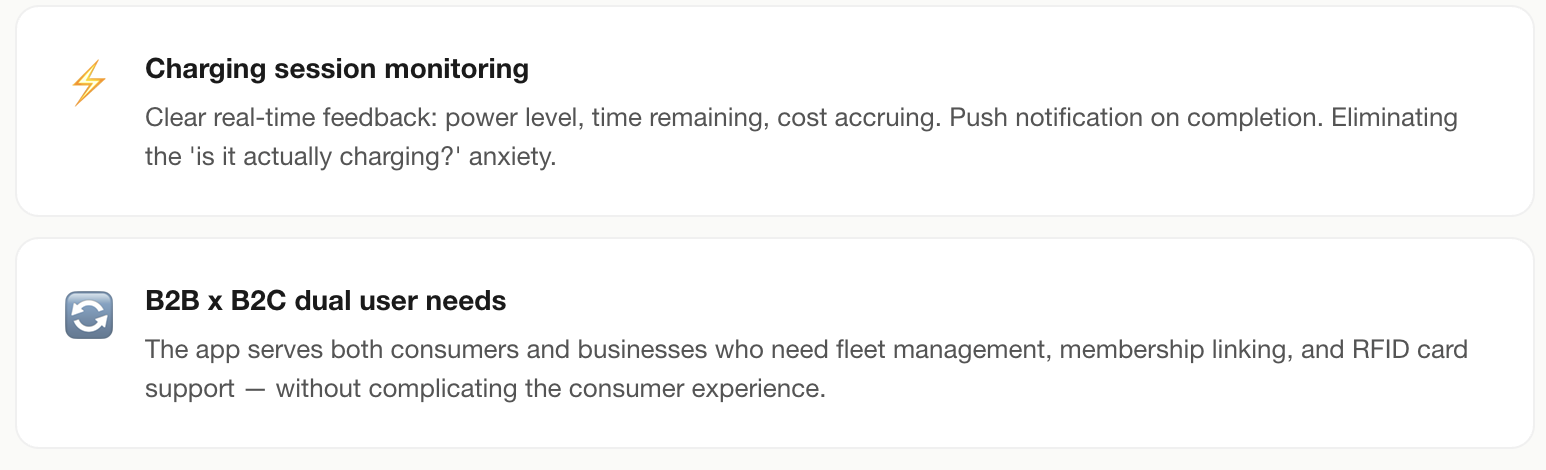
After charging starts: Is it really charging? How long will it take? Will I be notified when it's finished? Is the cost correct? A persistent, low-level anxiety.
Real-time status = #1 feature request in reviewsCore Design Challenge
How do you make charging an EV feel as effortless as filling up gas — in a world where every charger brand has a different app, different payment, and different UI?
Noodoe's answer: eliminate the app maze entirely. Scan a QR code on the charger, follow the instructions, start charging. No account required.Research & Discovery
Understanding the driver's charging anxiety
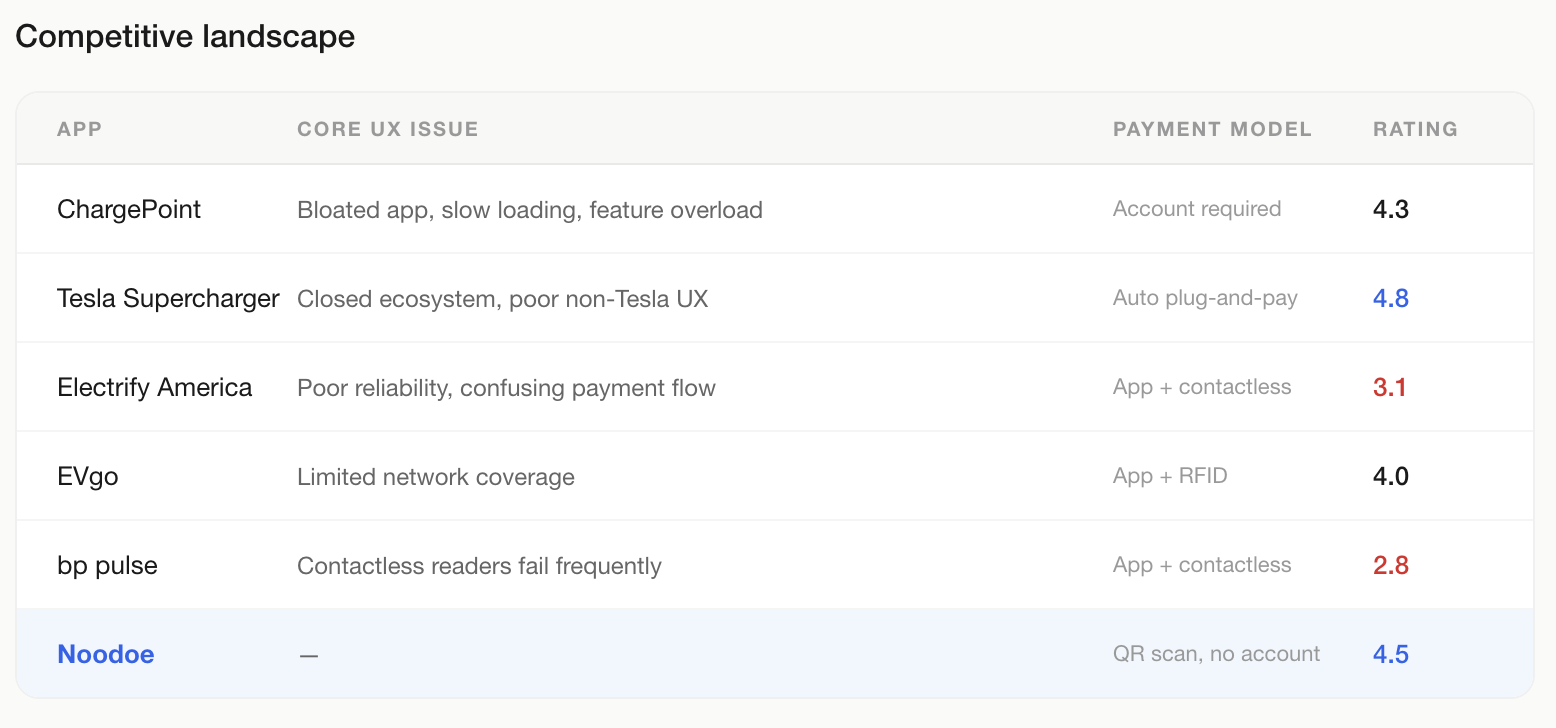
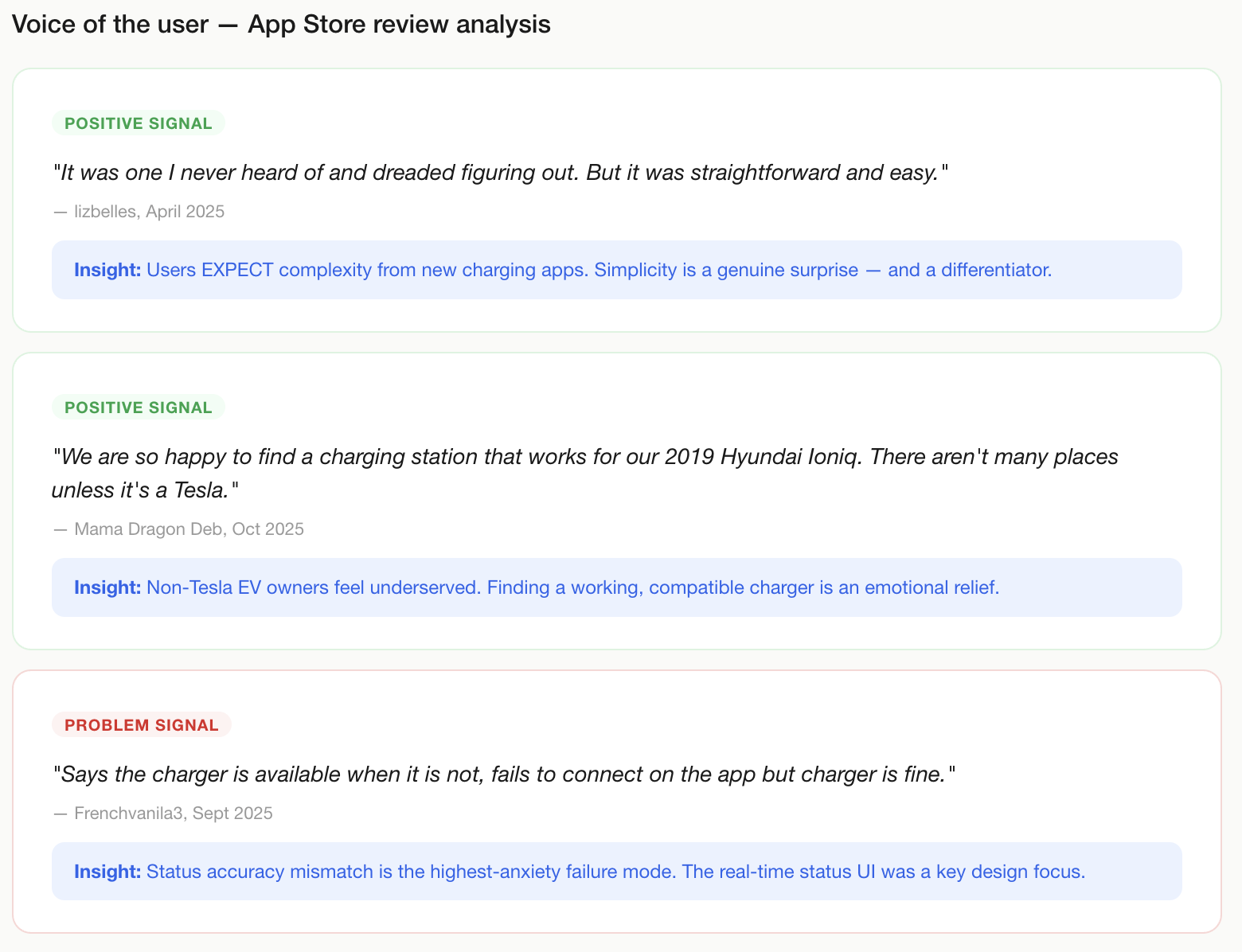
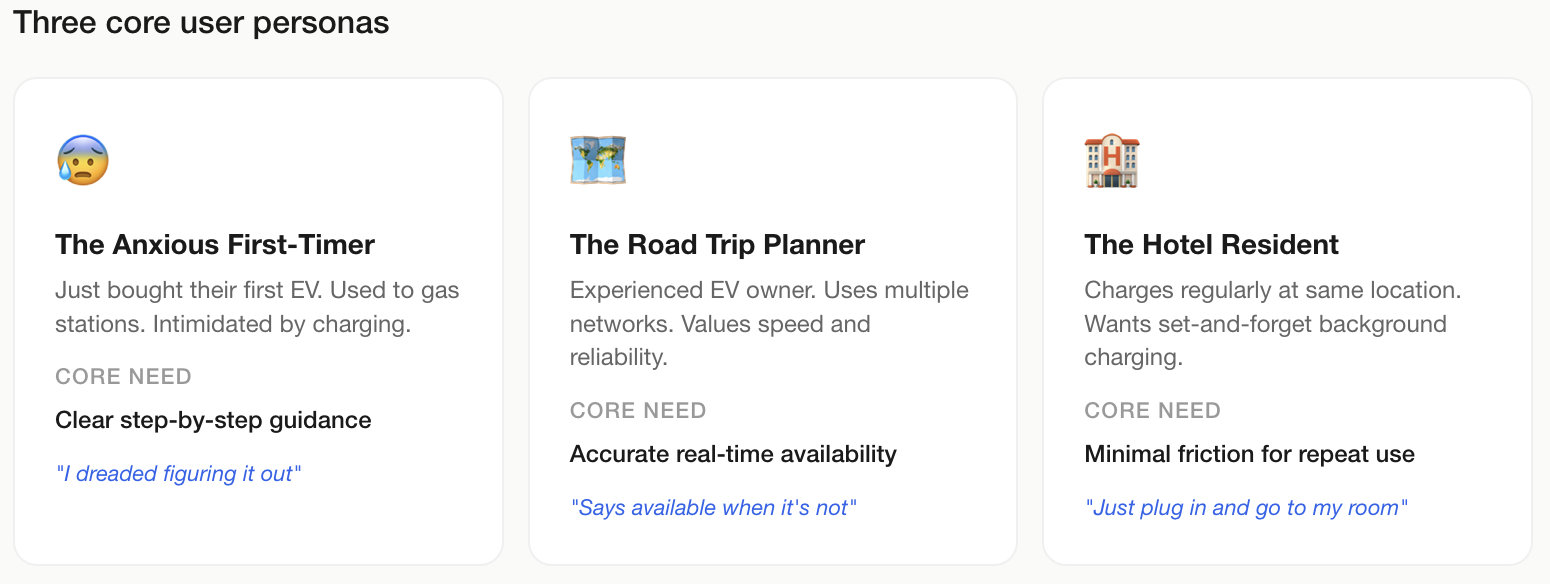
I analyzed hundreds of App Store reviews across Noodoe and competitors, studied industry reports from J.D. Power, ChargeHub, and USCALE, and mapped the complete EV charging journey from "I need to charge" to "I'm done and driving away."
Design Approach
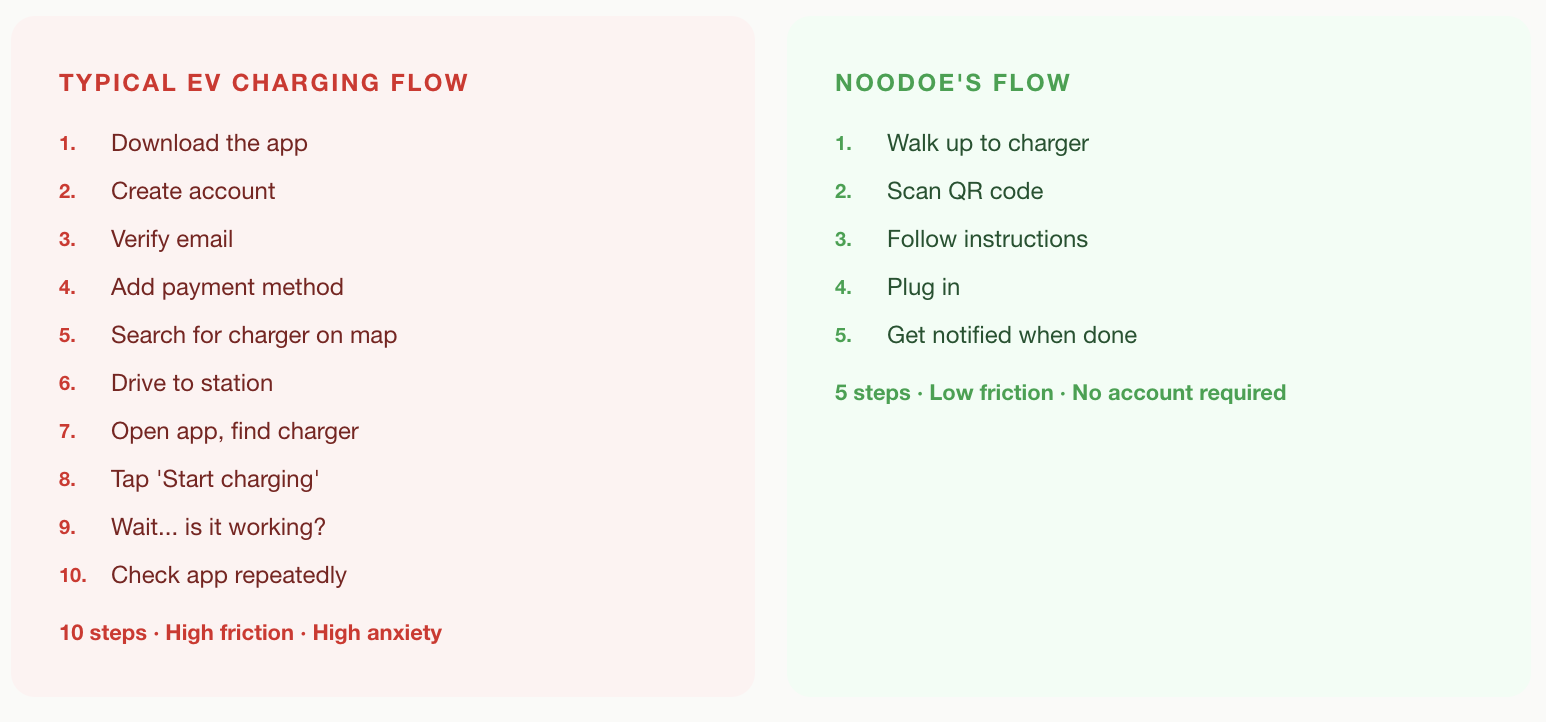
Scan, charge, go — Noodoe's design philosophy
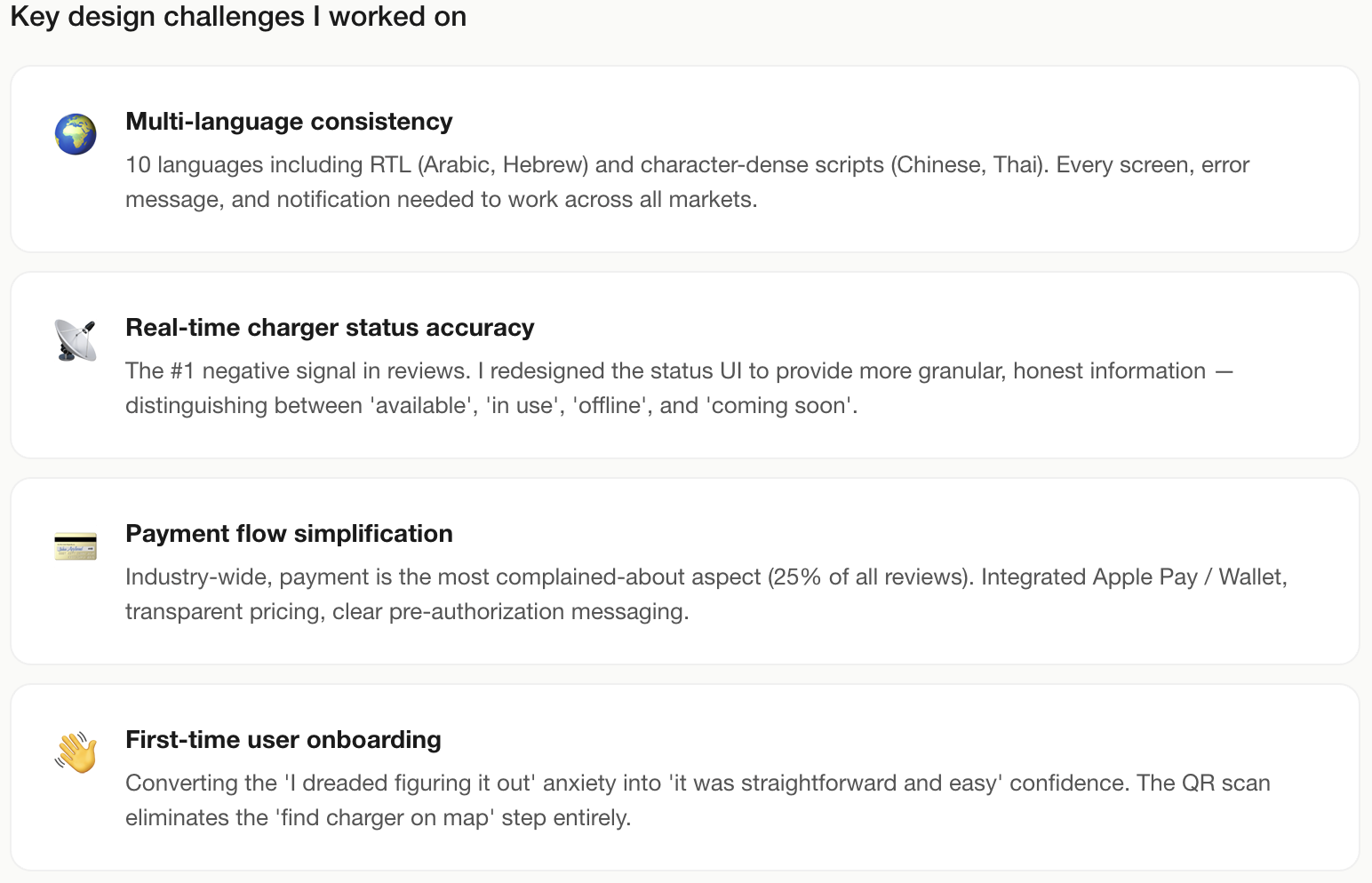
While competitors built feature-heavy apps that tried to be everything, Noodoe took the opposite approach: reduce the charging experience to its absolute essence.
Measurable outcomes
"It was straightforward and easy. The people will buy more EVs if non wealthy people can find enough charging."
— Noodoe user, App Store, April 2025
98%
Network uptime
vs. 78% industry avg4.5★
App Store rating
721+ reviews18
Countries served
40 US states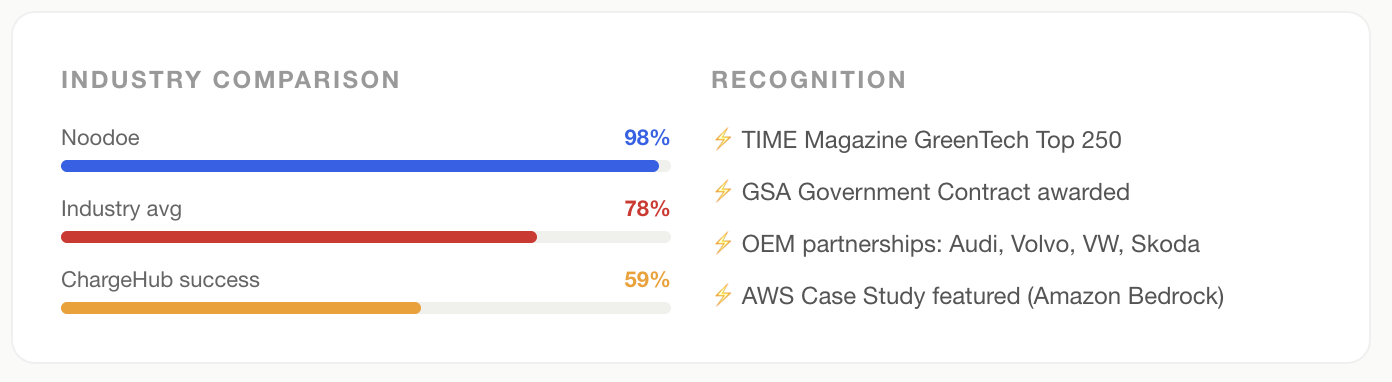
10-25%
Revenue increase
AI pricing optimizationReflection
What designing for climate tech taught me
Designing for a system, not just a screen
EV charging is not just an app problem — it's a system spanning hardware (the charger), software (the app), infrastructure (the network), and human behavior (the driver's anxiety). My industrial design training at Pratt prepared me to think in systems, which was essential for understanding how a button on a screen connects to a physical plug in a parking lot 10,000 miles away.
The power of reducing one step
In EV charging, every additional tap is a potential point of abandonment — not just of the app, but of EV ownership itself. The QR scan-to-charge flow taught me that the most impactful design work is about removing things, not adding them.
Designing across cultures without losing clarity
Supporting 10 languages across 18 countries meant every design decision had to be tested against RTL layouts, character-dense scripts, and cultural differences in how people understand payment, time, and distance.